
The War Washington Does Not Want
AMERICAS
Philip Morande
5/22/20263 min read
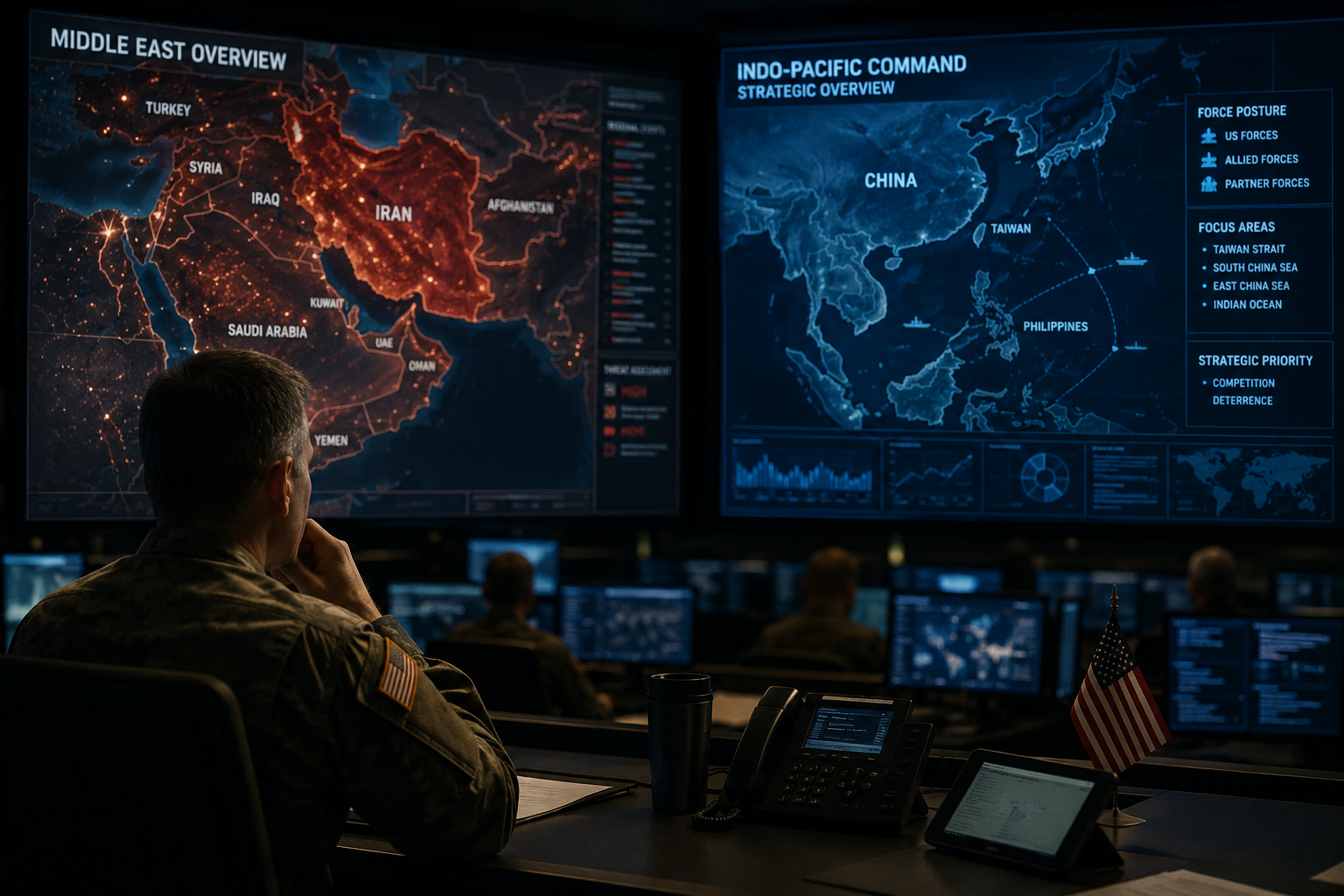
One of the biggest criticisms of the war President Trump decided to begin against Iran is the apparent lack of a clear long-term plan. The paradox of the current confrontation is that the United States appears simultaneously trapped in the Middle East and psychologically detached from it.
The problems this conflict brings to the table are evident: there is no clear strategy to defend traditional American allies such as Saudi Arabia, Kuwait, or the Emirates in the event of a wider regional escalation; there is no defined political objective after severely degrading Iran’s military and strategic infrastructure; and there is no certainty about whether Washington seeks a prolonged confrontation, a limited punitive campaign, or simply intends to leave the conflict partially unresolved.
These criticisms are probably correct. However, there is also a possibility that President Trump is attempting to redirect American foreign policy toward a different strategic framework altogether. The current confrontation with Iran may represent not the renewal of long-term American commitment to the Middle East, but part of a broader strategic transition in which Washington seeks to redistribute regional security responsibilities while prioritizing future competition with China. Symptoms of this shift can also be observed in the growing tensions inside NATO and in the evolving relationship between the United States and Europe regarding Ukraine and Russia.
Indeed, the United States was strongly pushed by the Israeli government to intervene more directly against Iran. Yet tactical alignment does not necessarily imply strategic convergence. Israel views Iran as an immediate existential and regional threat. Washington, however, increasingly sees the Middle East as a costly theater that distracts from what many American strategists now consider the central geopolitical challenge of the twenty-first century: China.
One of the reasons many Americans elected President Trump in 2024 was the exhaustion produced by the wars in Iraq and Afghanistan. After decades of military intervention, enormous financial costs, and the loss of thousands of lives, the final outcome generated deep frustration inside American society. The perception that many of these countries eventually returned to conditions similar to those that existed before the interventions produced two important consequences: a transformation in American strategic culture and growing fatigue toward long, expensive, and open-ended conflicts far from home.
This strategic transition did not begin exclusively under President Trump, nor did it disappear during the Biden administration. Despite major ideological and rhetorical differences between both governments, several core strategic tendencies remained remarkably consistent. The withdrawal from Afghanistan, the preservation of tariffs and technological restrictions against China, the strengthening of Indo-Pacific partnerships, and the increasing emphasis on strategic competition with Beijing all suggested that Washington’s long-term priorities were already shifting beyond the Middle East.
None of this means that President Trump is following a coherent master plan. On the contrary, his public rhetoric often oscillates between maximalist declarations and strategic ambiguity, making it difficult to determine whether the administration seeks prolonged confrontation, regional deterrence, or merely temporary demonstrations of force. Yet this ambiguity itself may reflect a broader uncertainty inside Washington regarding the future role of the United States in the Middle East.
The deeper question emerging beneath the current crisis is whether the United States still views the Middle East as the central theater of international order, or merely as one regional system among several competing for increasingly limited American strategic attention.
As the importance of strategic geography returns and international politics becomes increasingly fragmented into regional spheres of influence, understanding the direction of American foreign policy becomes even more important. Washington may be entering a phase in which traditional allies are expected to assume greater responsibility for their own regional security, while the United States concentrates its long-term strategic focus on a single major competitor: China.
History offers many examples of great powers redistributing military, economic, and political priorities during periods of global transition. Yet such transformations are rarely symmetrical, and their outcomes often depend on geography, regional balances of power, domestic political pressures, and the unpredictability of historical events themselves.
Insights
Explore concise geopolitical analysis here.
Connect, write, inquiries
info@labsgeo.com
© 2025-2026. All rights reserved.
Geopolitical Labs publishes independent essays on international politics, strategic geography, and long-term global change. Subscribe to receive a simple notification whenever a new column is published. No spam. No advertising. Just new ideas.